
Live aircraft schedule vs. static spreadsheets
Coordinating crew assignments, maintenance windows, and flight legs requires continuous alignment across a fleet. To manage this timeline, many operators still rely on generic tools like spreadsheets and digital calendars.
There is a logical reason these tools endure: they are highly visual, instantly flexible, and require zero staff training. However, this visual simplicity isolates the schedule from live aircraft status, turning maintenance tracking into a manual cross-referencing process. Evaluating these options requires analysing how data flows through the scheduling workflow rather than focusing on surface-level convenience.
The value of generic tools
Spreadsheets and shared digital calendars persist because they offer clear visual intuition. Schedulers can colour-code tails, adjust columns, and view the entire week’s commitments at a glance.
They grant teams autonomy over their environment; if a scheduler needs to modify a layout, change terminology, or create a custom note field, they can do so instantly. This eliminates the need to log IT tickets, wait for approvals, or depend on software development cycles
From a management perspective, spreadsheets also eliminate user onboarding friction. Because most new hires understand standard sheets and calendars, the organisation avoids the initial drop in productivity often associated with launching a new system.
The maintenance gap
The primary limitation of these tools is data isolation. Because a spreadsheet is static, it cannot automatically adjust to actual flying hours or maintenance cycles recorded in the field. When actual flight times deviate from the plan due to weather, air traffic control holds, or rerouting, schedulers must manually update the spreadsheet. This requires constantly cross-referencing journey logs, calling the hangar, or checking separate software to ensure an aircraft is not approaching an inspection limit.
If an update is missed, the coordination gap is immediate. Sales continues to quote the tail and operations schedules missions based on outdated data, meaning maintenance conflicts are often discovered late, resulting in a grounded aircraft or a disrupted trip.
The aviation-specific solution
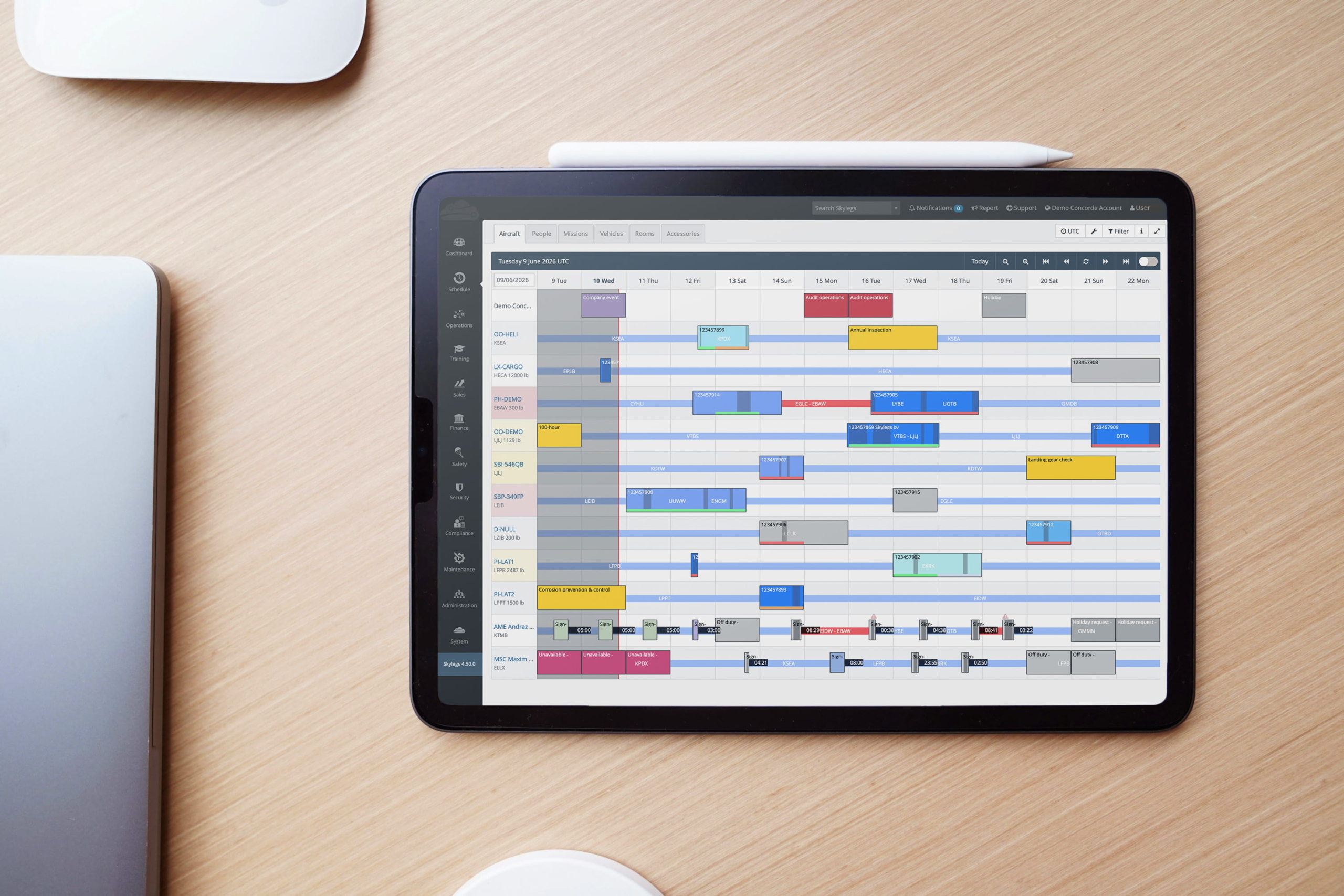
Transitioning to an aviation-specific smart timeline like Skylegs’ does not require sacrificing the visual simplicity that makes spreadsheets appealing. Instead, a dedicated system bridges the gap between visual intuition and real-time status.
Skylegs preserves the flexible, drag-and-drop environment that scheduling teams value. Schedulers can manage flights with the same visual ease as a spreadsheet, reducing user friction during transition.
The primary advantage occurs beneath the surface, where the Skylegs maintenance module links directly with the schedule. The system continuously predicts upcoming inspections based on planned sectors and actual flying hours.
If a flight runs long and brings a tail closer to an inspection limit, the platform updates aircraft availability on the timeline. This prevents scheduling errors before dispatch occurs.
Summary
| Operational dimension | Static spreadsheets & generic calendars | Skylegs unified smart timeline |
|---|---|---|
| Data connectivity | Isolated; requires manual updates from crew logs and maintenance reports. | Live; automatically links flight hours, crew tracking, and maintenance status. |
| Workflow flexibility | Total, instant layout control without IT intervention. | Standardised, compliant structure with customisable nomenclature to match the Operations Manual. |
| Risk of overflight | High; relies completely on human memory to cross-reference intervals. | Low; automated background calculations actively block non-compliant bookings. |
| Implementation effort | Zero onboarding friction or short-term productivity loss. | Structured migration supported by continuous, responsive vendor care. |
Choosing between these environments is a balance between short-term administrative convenience and long-term asset protection. While spreadsheets offer initial simplicity, an interconnected schedule ensures operations teams work with accurate, real-time data for every flight.

